The process
Each sheet of this fruit-leather is the result of continuous experimentation and refinement. Building on my experience experimenting with food ingredients such as gelatin, glycerin, agar and other materials, I explored how different mixtures respond to heat, cooling, drying, and varying proportions.
Natural by-products, orange peels, coffee grounds, tea leaves, and other food waste, were incorporated to alter colour, texture, and surface qualities, allowing each material to develop its own unique character.
The result is a biodegradable (and completely edible) material designed through curiosity, iteration, and a new perspective on everyday waste.
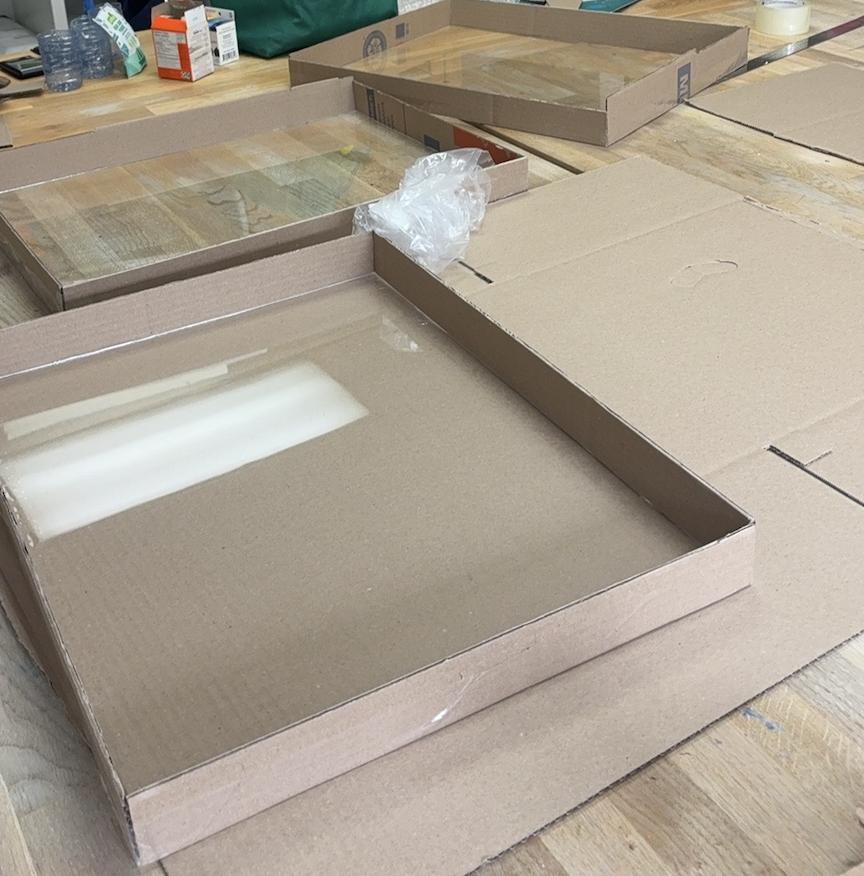
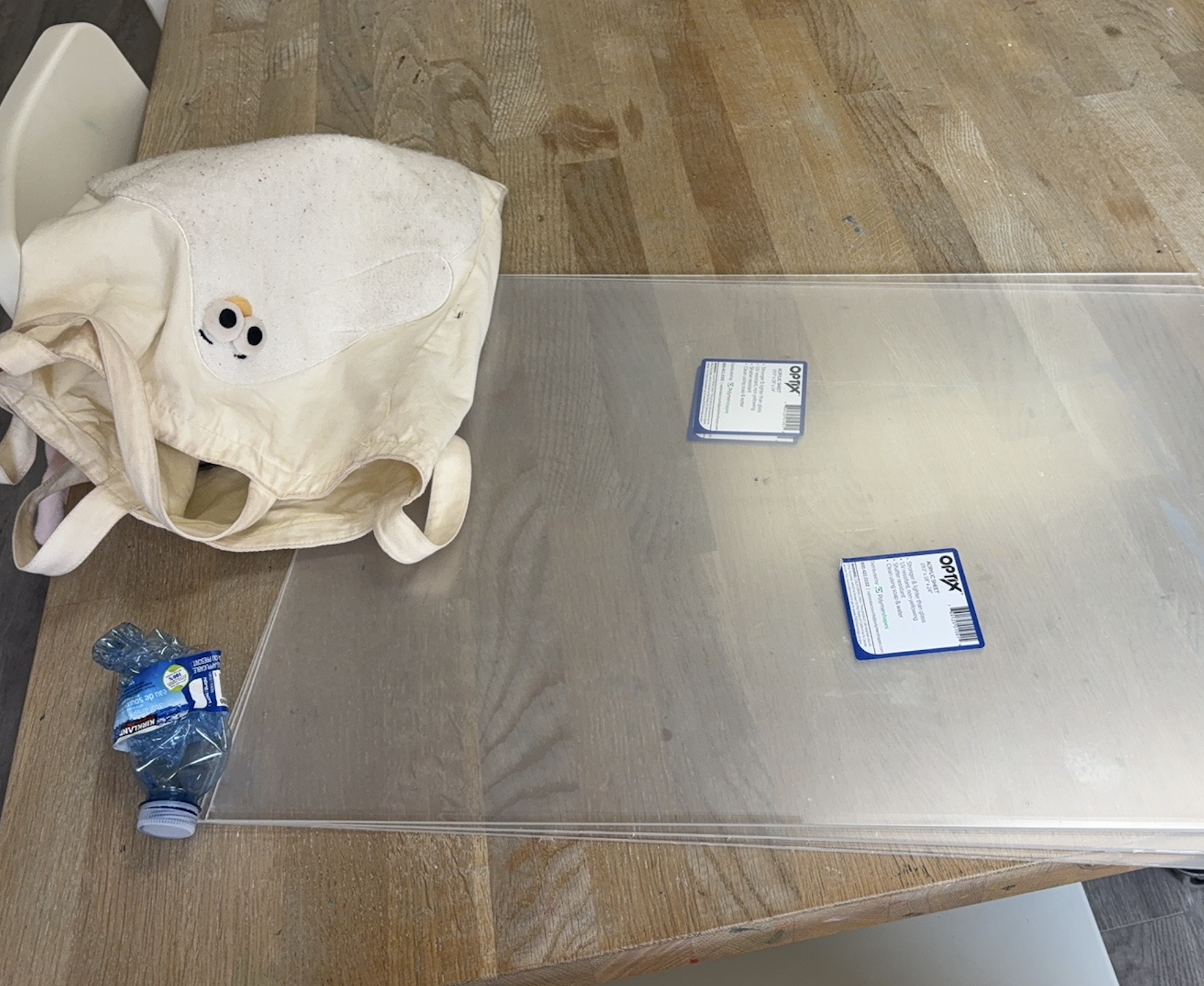
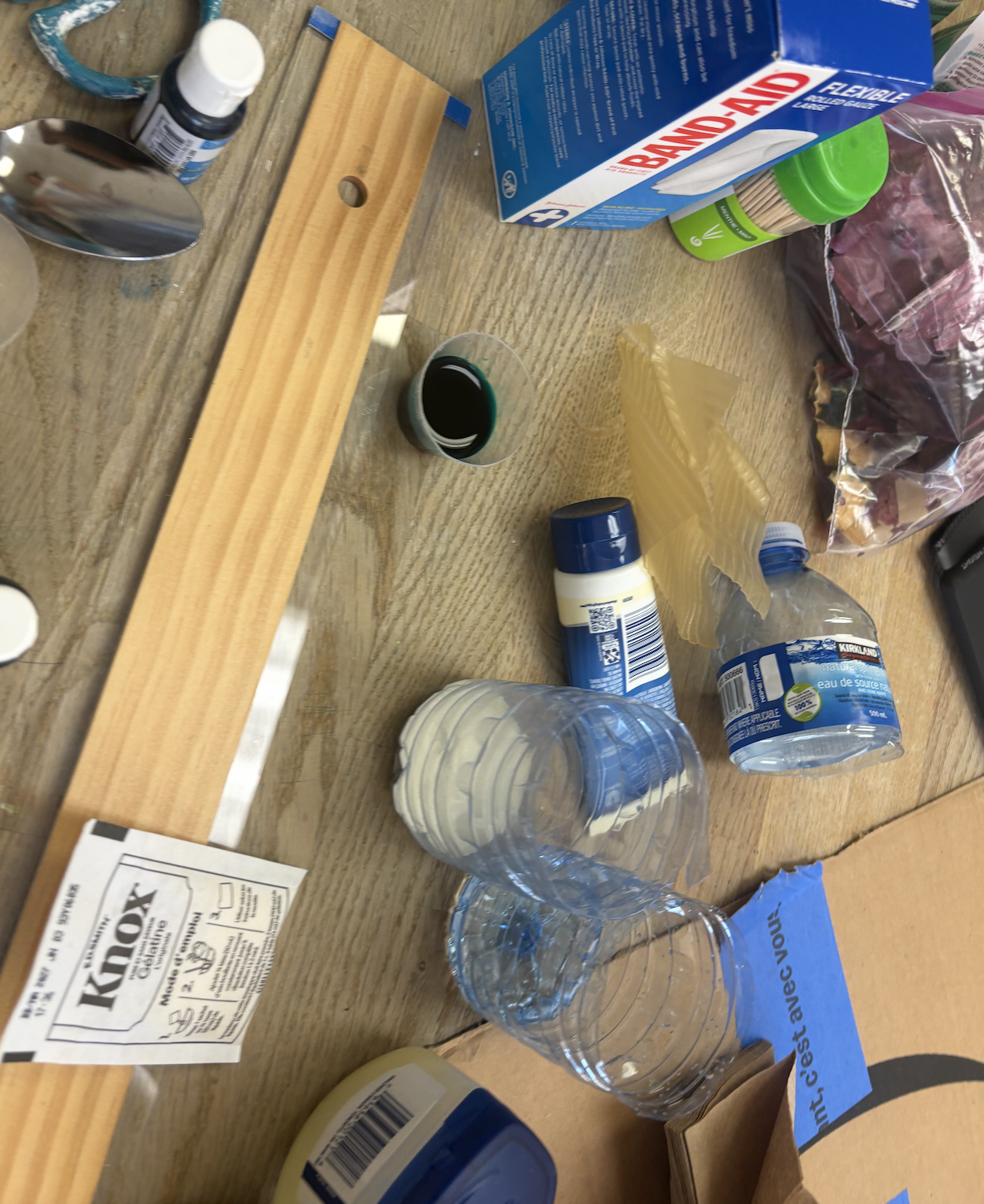
First, building the molds: acrylic boards and cardboard. Laying out ingredients!
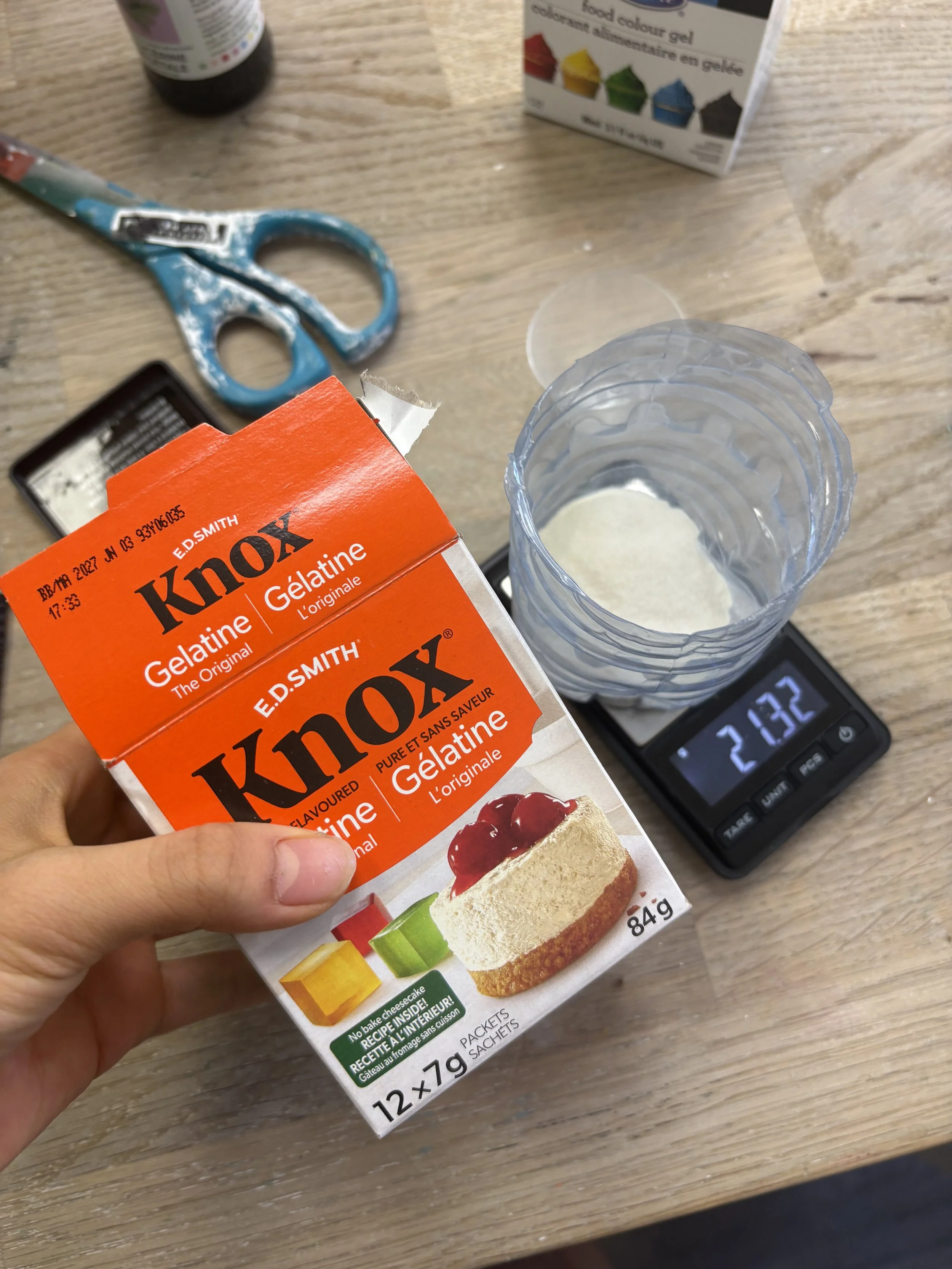
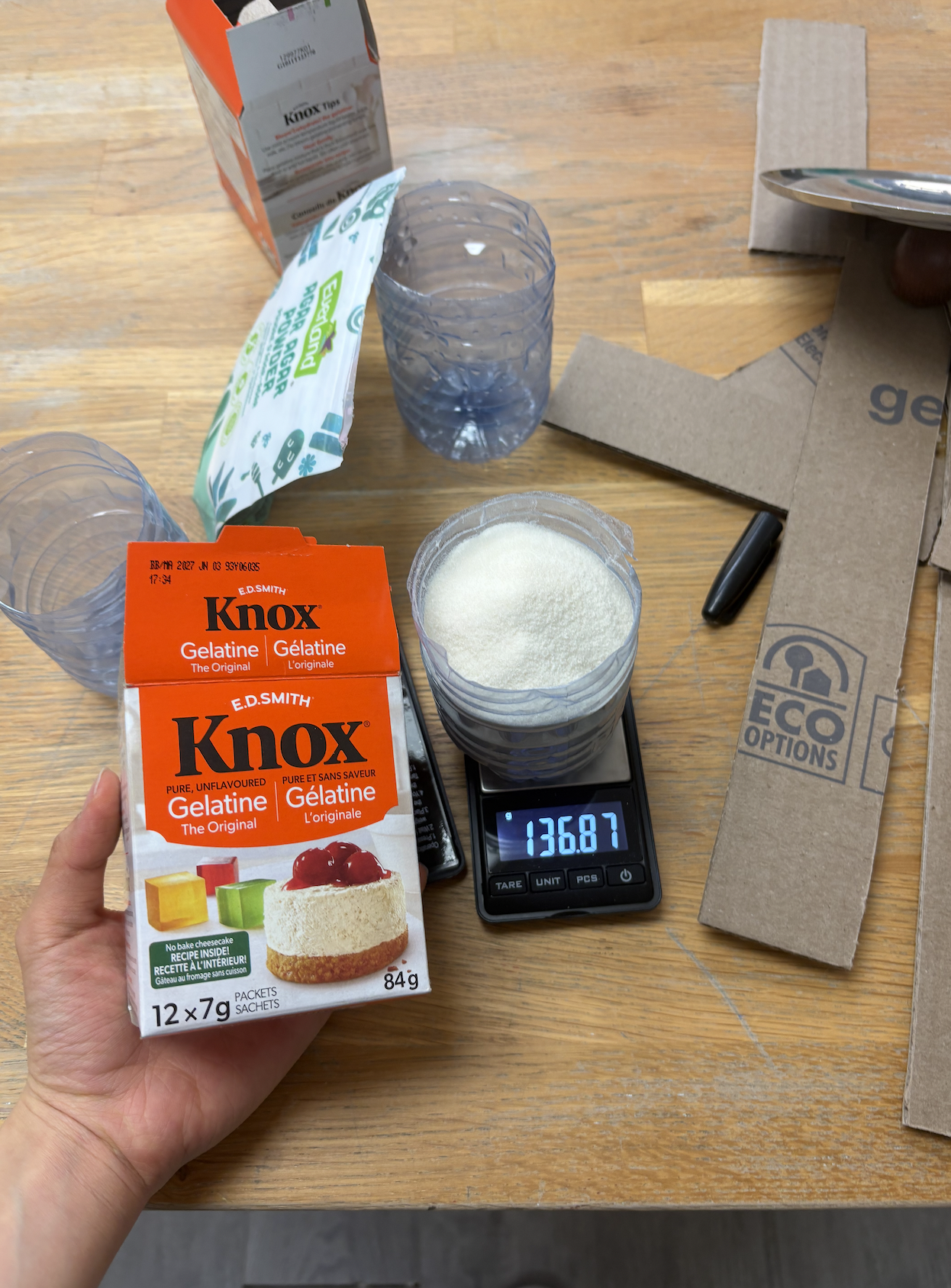
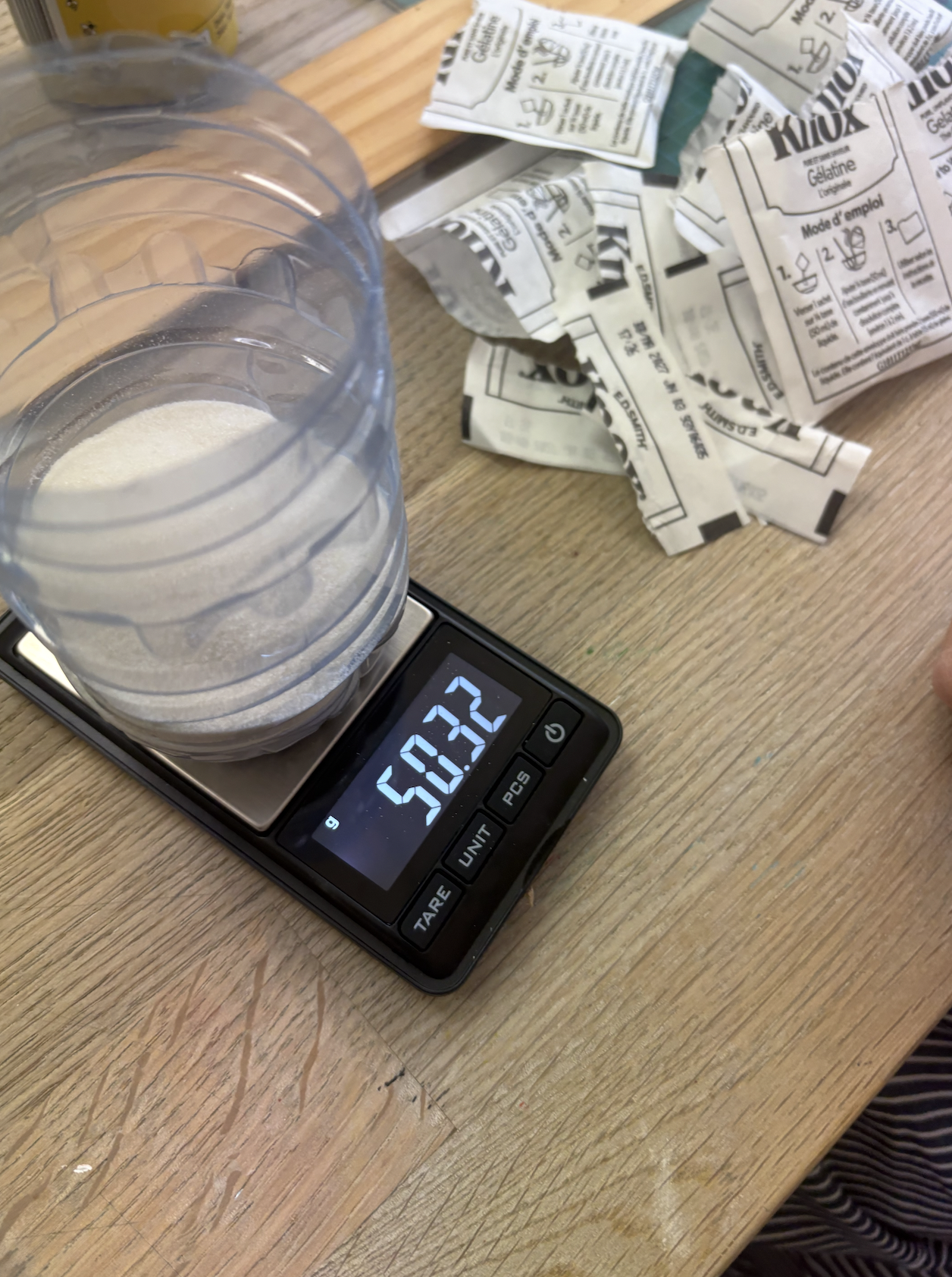
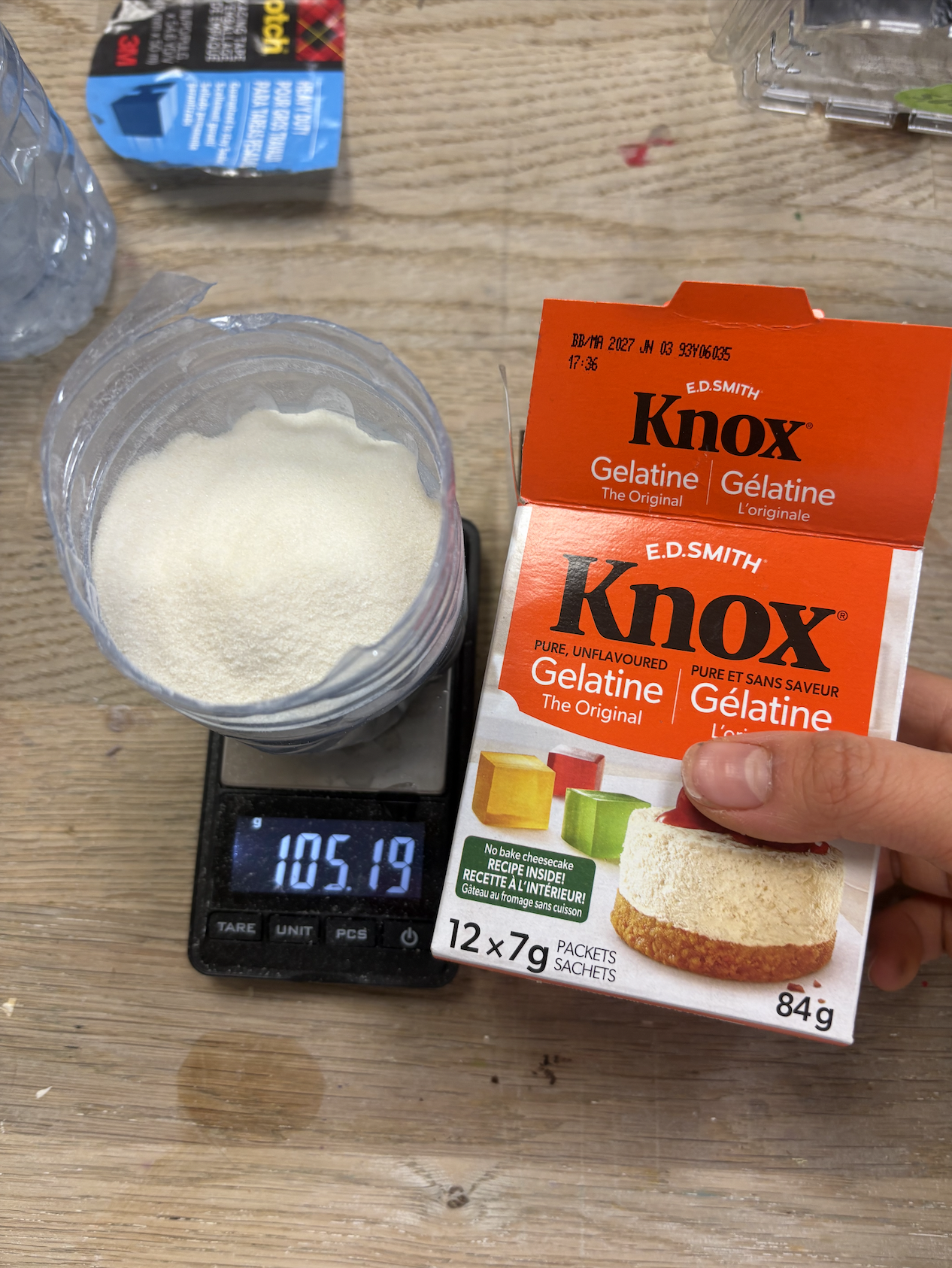
Gelatin gives it structure in the same way it turns water into a solid jello.
Notes:
cheapest at Safeway
determines thickness
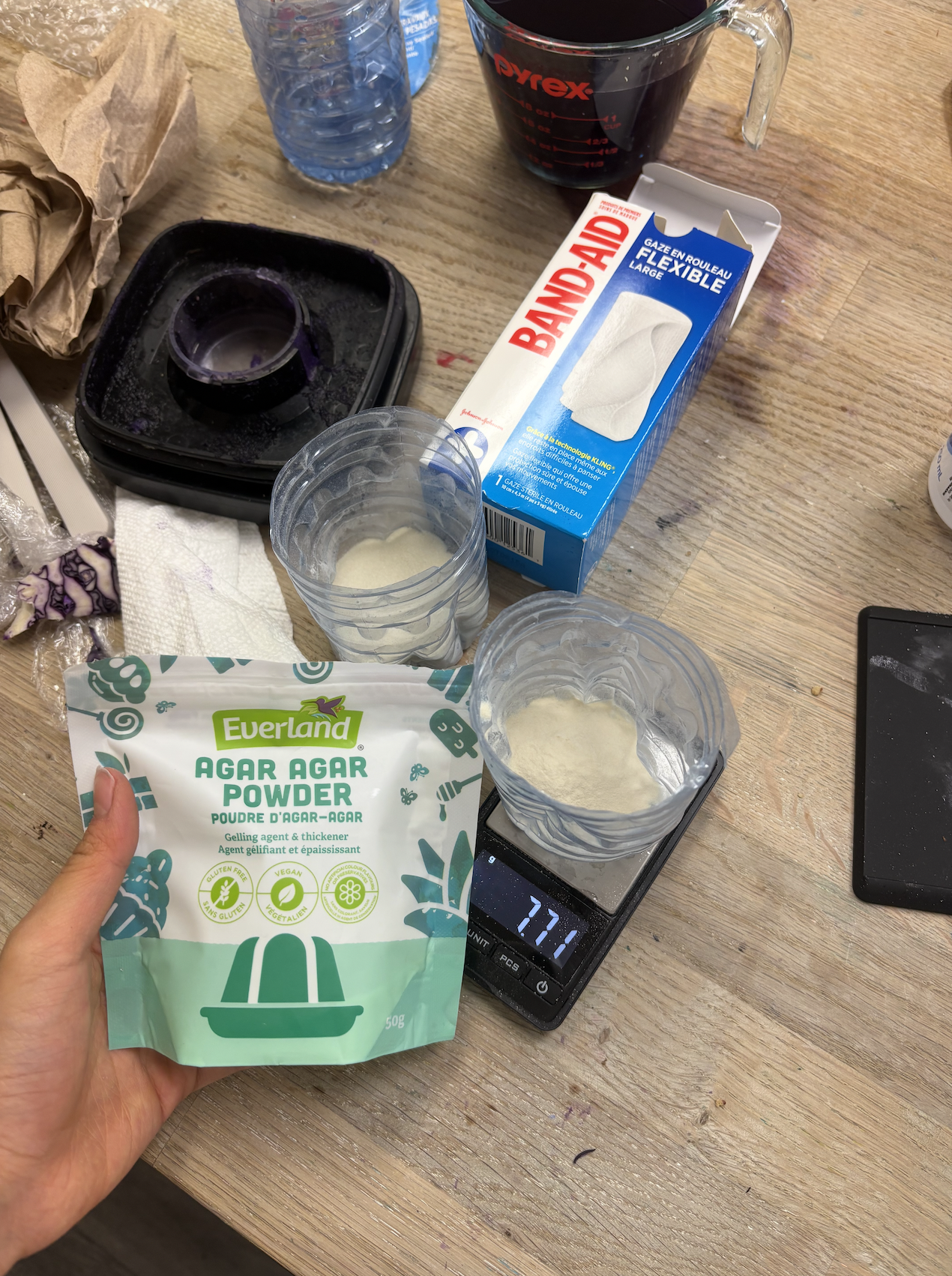
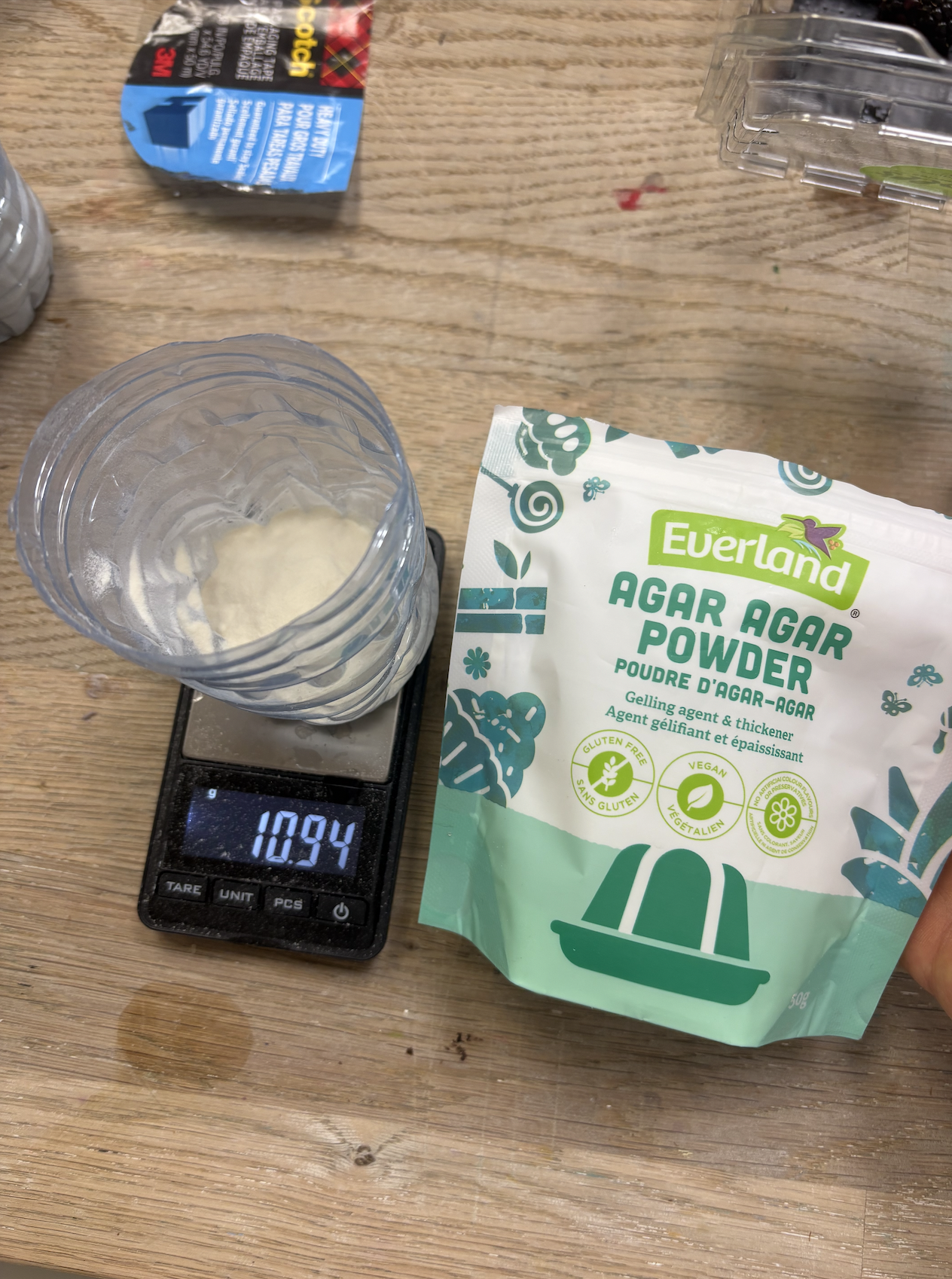
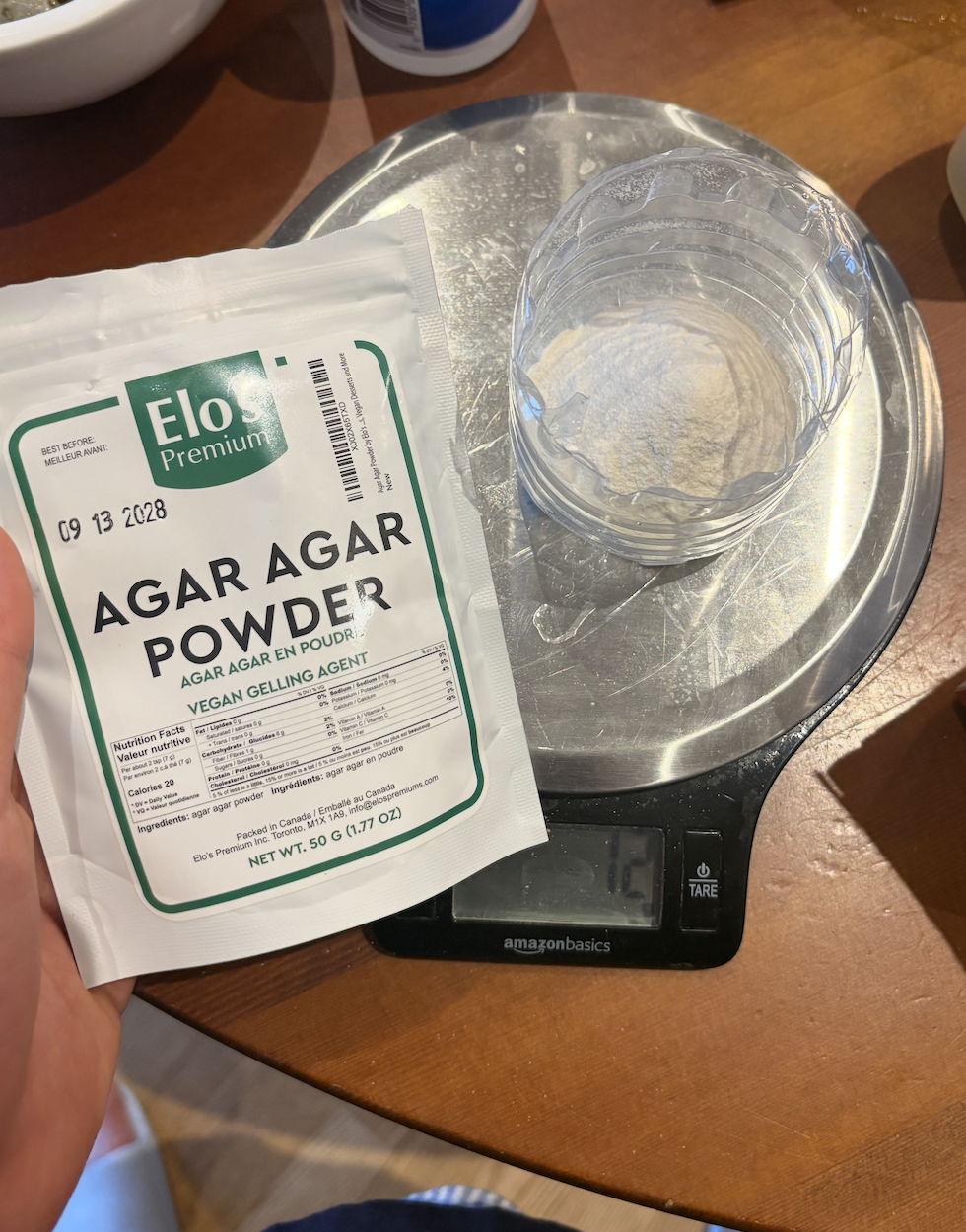
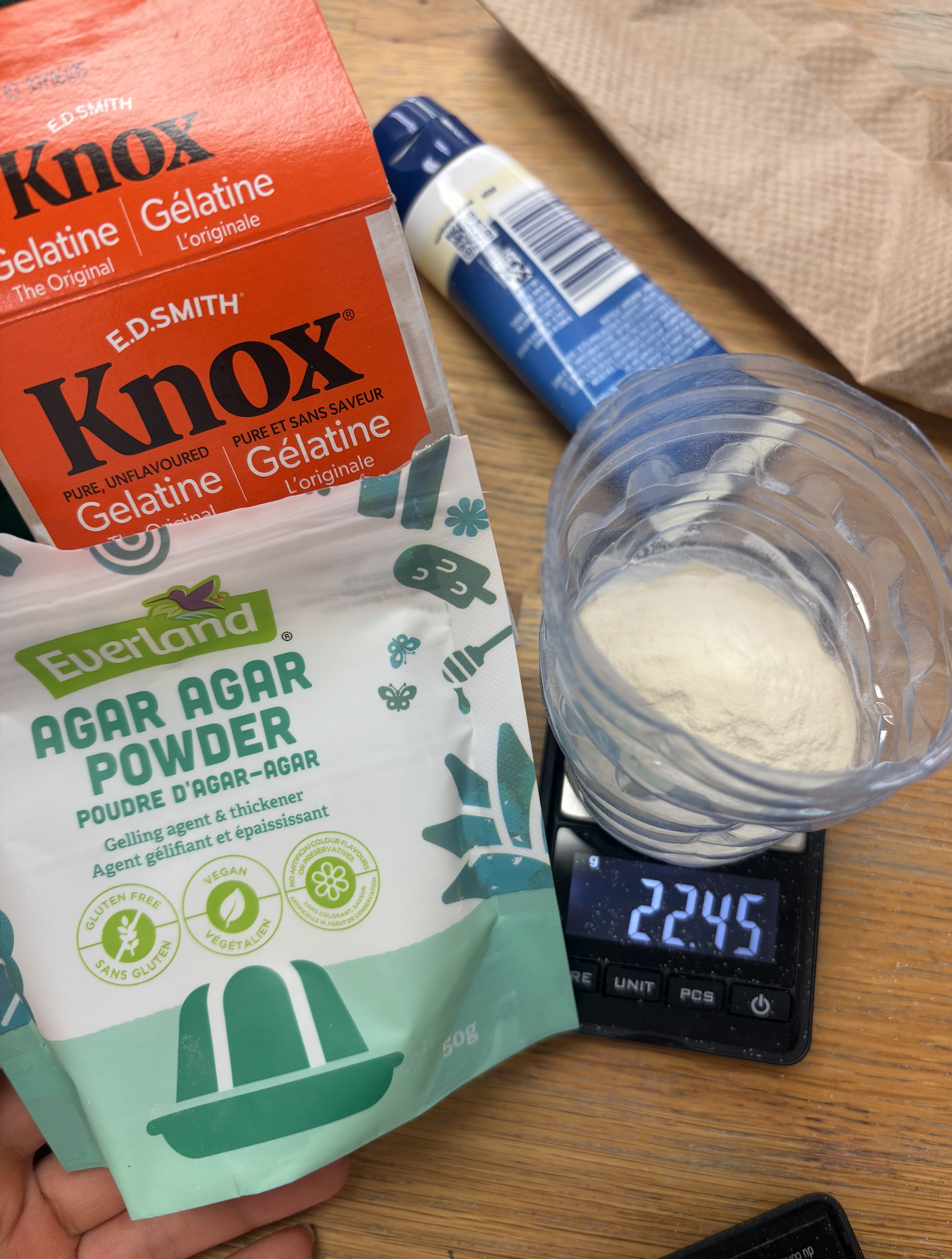
Agar agar works the same way as gelatin: as a structural agent for how its used to make gels
Notes:
Everland is the better brand
determines stretchiness
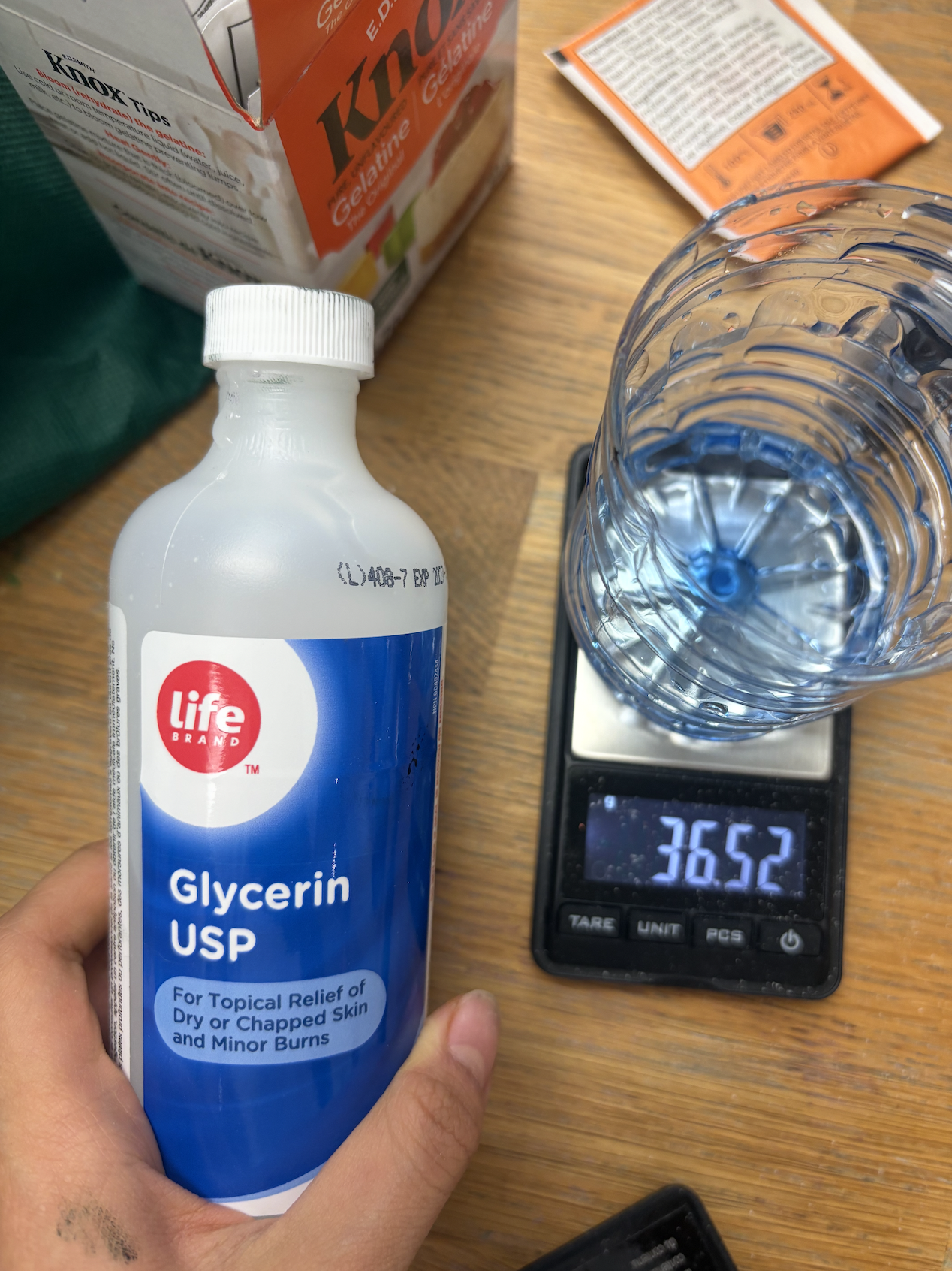
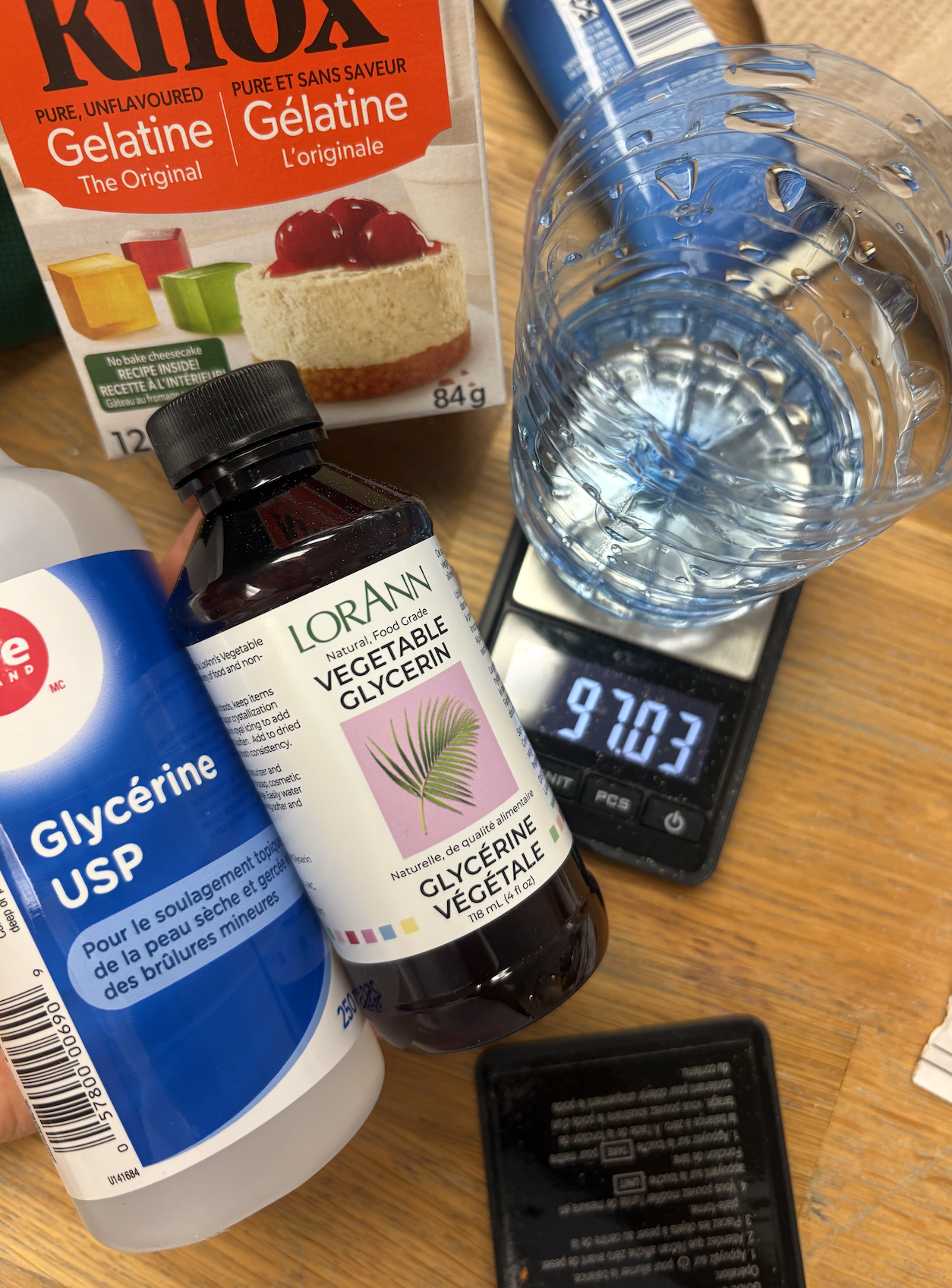
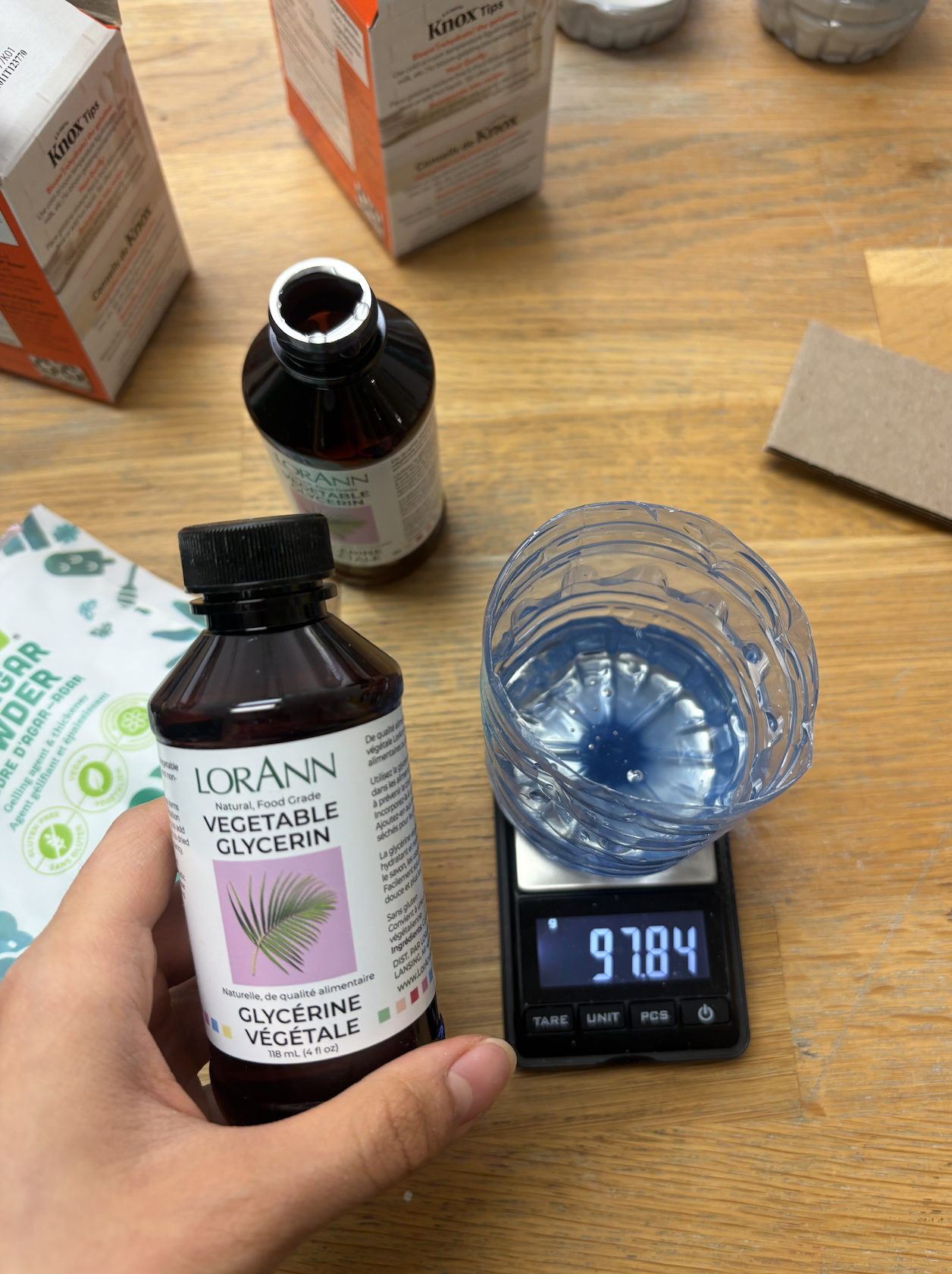
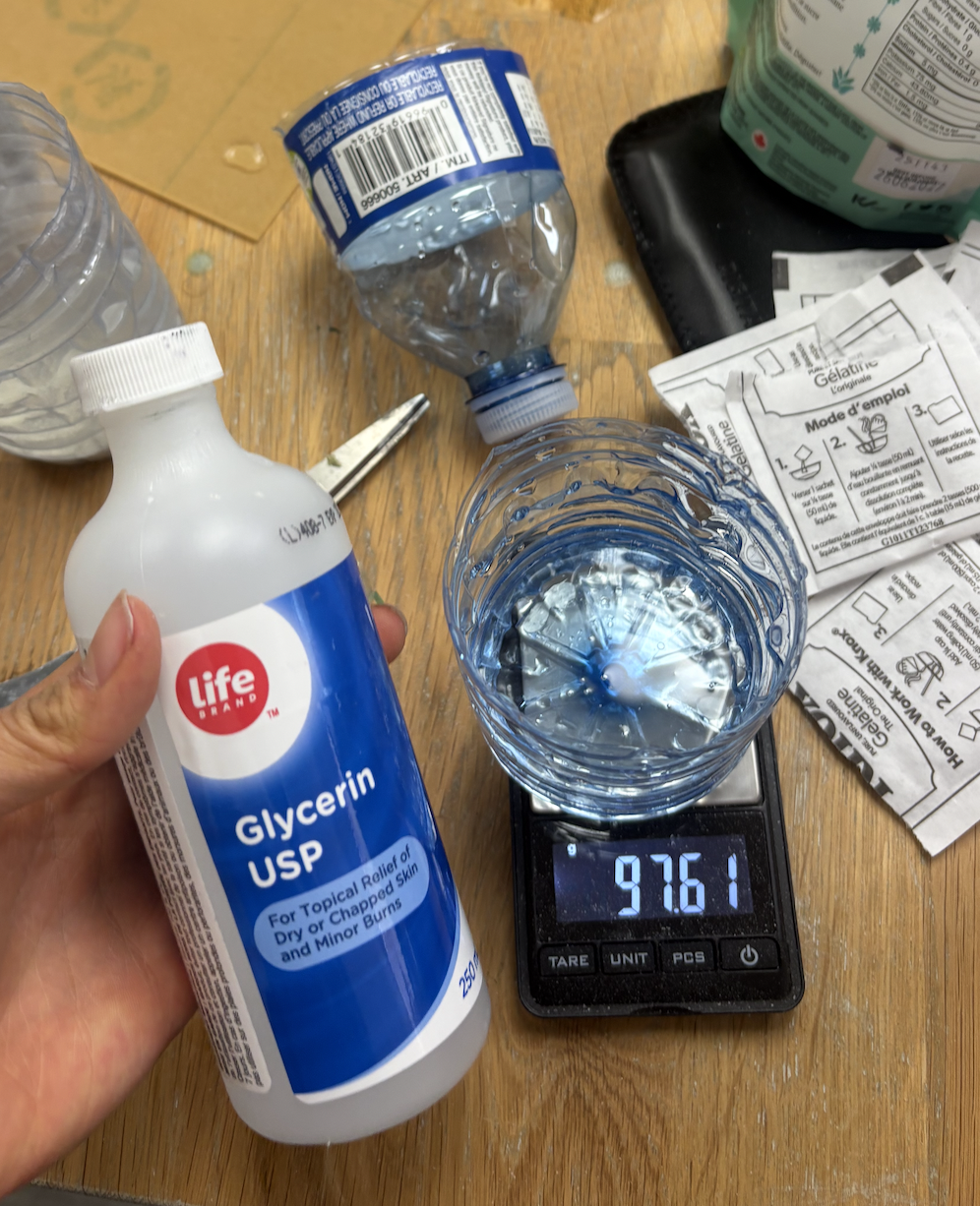
Glycerin softens the texture of the leather, much like how it works in skincare: softening skin.
Notes:
has to be 100% glycerin
About equal ratio to gelatin, a little less
Vegetable version works the same
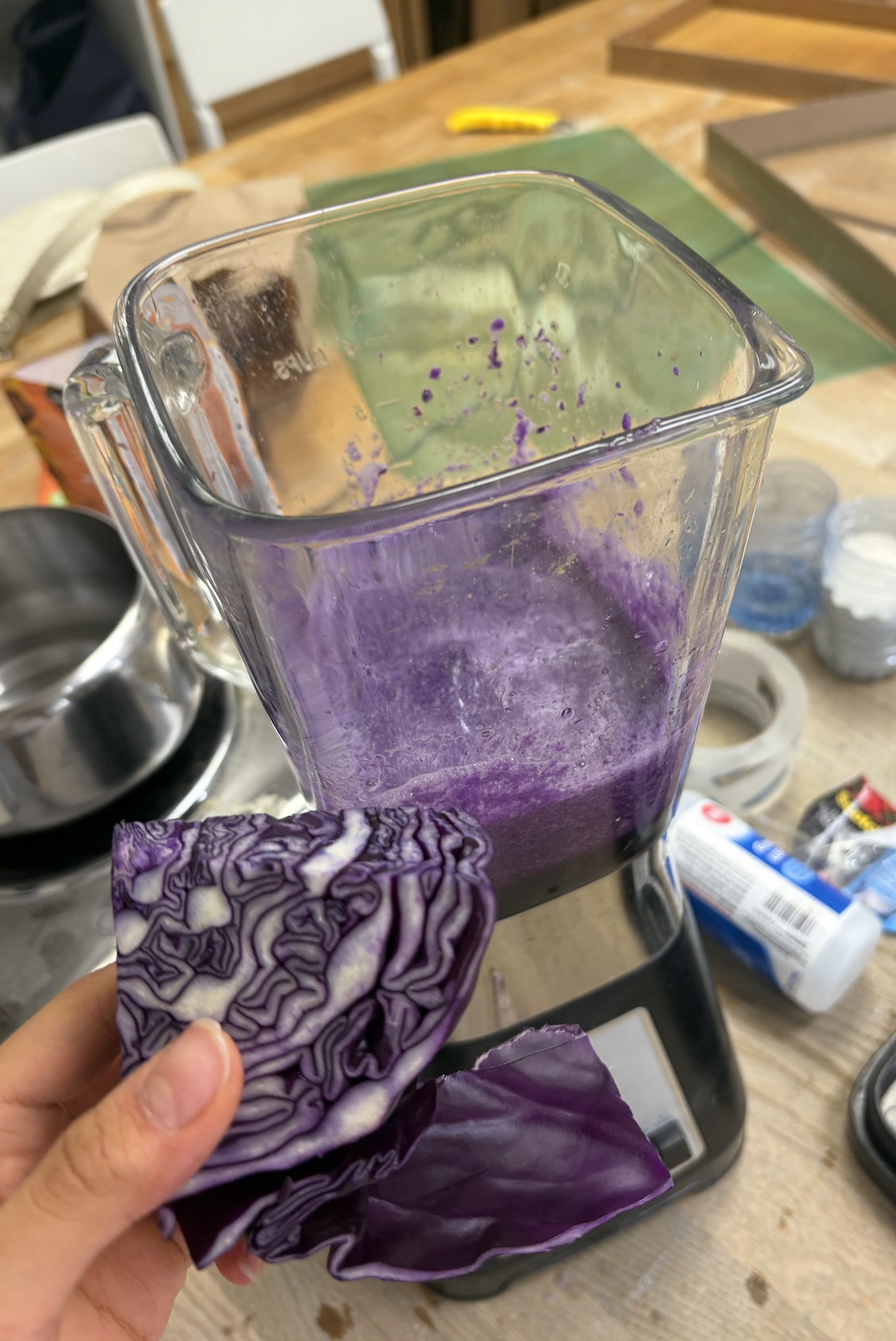
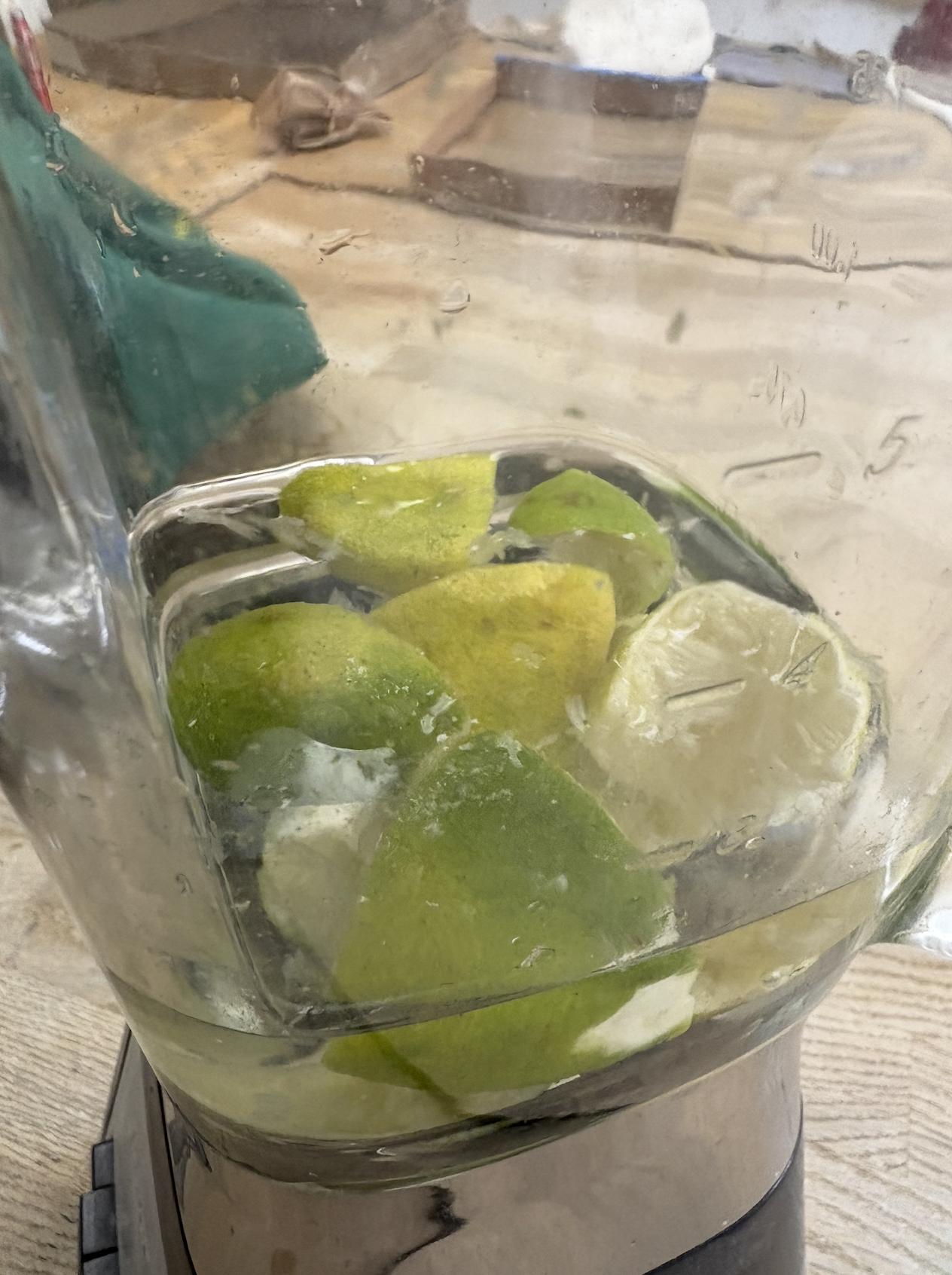
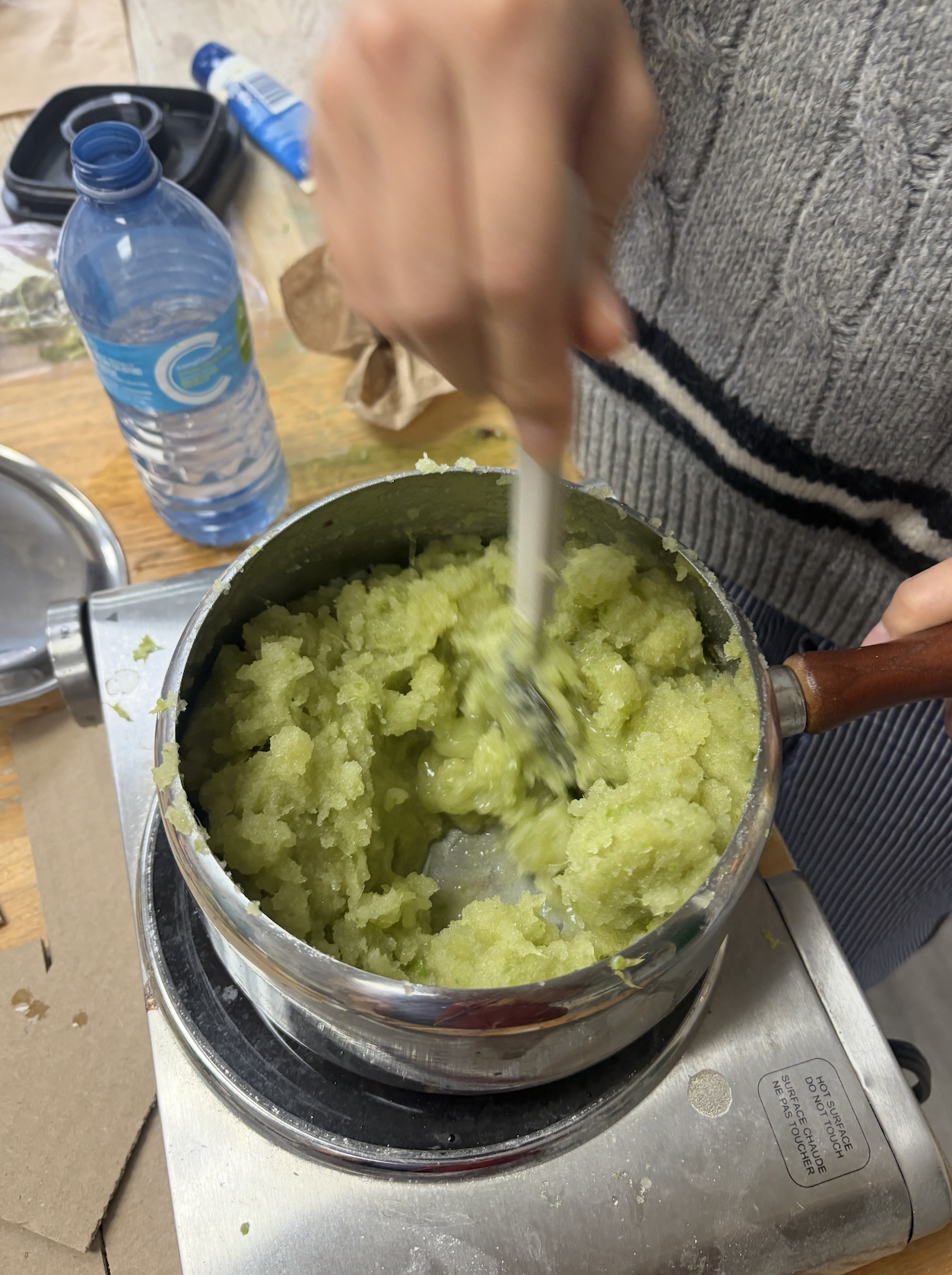
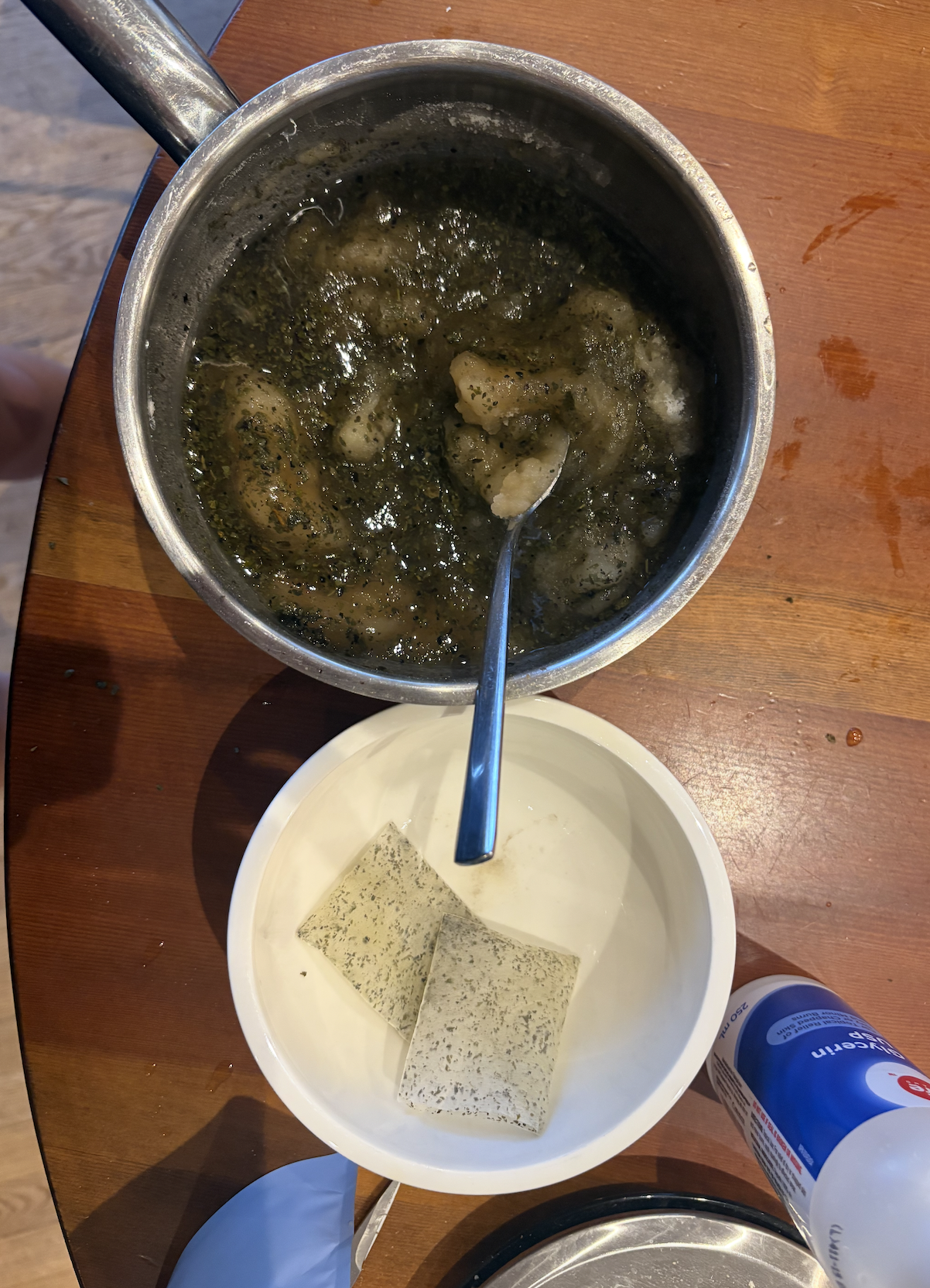
Here are some of the recorded food items I have tested with. Theres much more.
Notes:
can’t be sweet, must be peels for citrus fruits that aren’t lime. No fruit juice
Tea and coffee dyes the whole fabric
Purple cabbage can turn brown, some kind of oxidization?
